How to Track Multiple Job Interviews
Learn how to organize interview dates, people, notes, preparation, and follow-ups when several hiring processes are active at once.
To track multiple job interviews, keep each interview attached to its application and record the date, stage, participants, format, preparation tasks, and promised next step.
A calendar tells you when meetings happen. It does not preserve the context you need before and after each conversation.
Information to record for every interview
| Field | Why it matters |
|---|---|
| Company and role | Prevents details from blending across opportunities |
| Date, time, and time zone | Avoids scheduling mistakes |
| Interview format | Clarifies whether it is phone, video, onsite, panel, or assessment |
| Participants | Supports relevant research and thank-you messages |
| Interview stage | Shows how far the process has progressed |
| Questions and notes | Preserves what was discussed |
| Promised timeline | Determines the follow-up date |
| Next action | Makes preparation and communication visible |
Save the original job description and the résumé used for the application. Listings often change or disappear during a long process.
Build a preparation brief
Before each interview, create a one-page brief containing:
- The employer's main needs
- Three relevant examples from your experience
- Important facts about the company and team
- Questions you want to ask
- Names and roles of the interviewers
- Any concern you need to address clearly
Do not reuse the same brief without reviewing it. Similar job titles can emphasize very different outcomes.
Manage overlapping timelines
When several processes are active, record the latest expected decision date for each one. You do not need to tell every employer about every other interview. If you receive a written offer with a genuine deadline, contact other employers promptly and ask whether they can share or accelerate their timeline.
Be factual. Inventing an offer or deadline can damage trust.
Update the record immediately afterward
Within 15 minutes of an interview, capture:
- Questions asked
- Examples you used
- Information you learned
- Concerns or positive signals
- The next step and expected timing
This is much easier while the conversation is fresh. It also improves preparation if you meet a different panel later.
Review interviews separately from applications
Create a view showing only upcoming interviews and overdue interview actions. That protects preparation time while the wider application pipeline continues.
ApplyArc's interview tracker connects meetings, notes, actions, and applications. For follow-up timing, read how long to wait after an interview. If you are balancing an interview with new applications, see why you should keep applying after the first interview.
Keep preparation with the interview
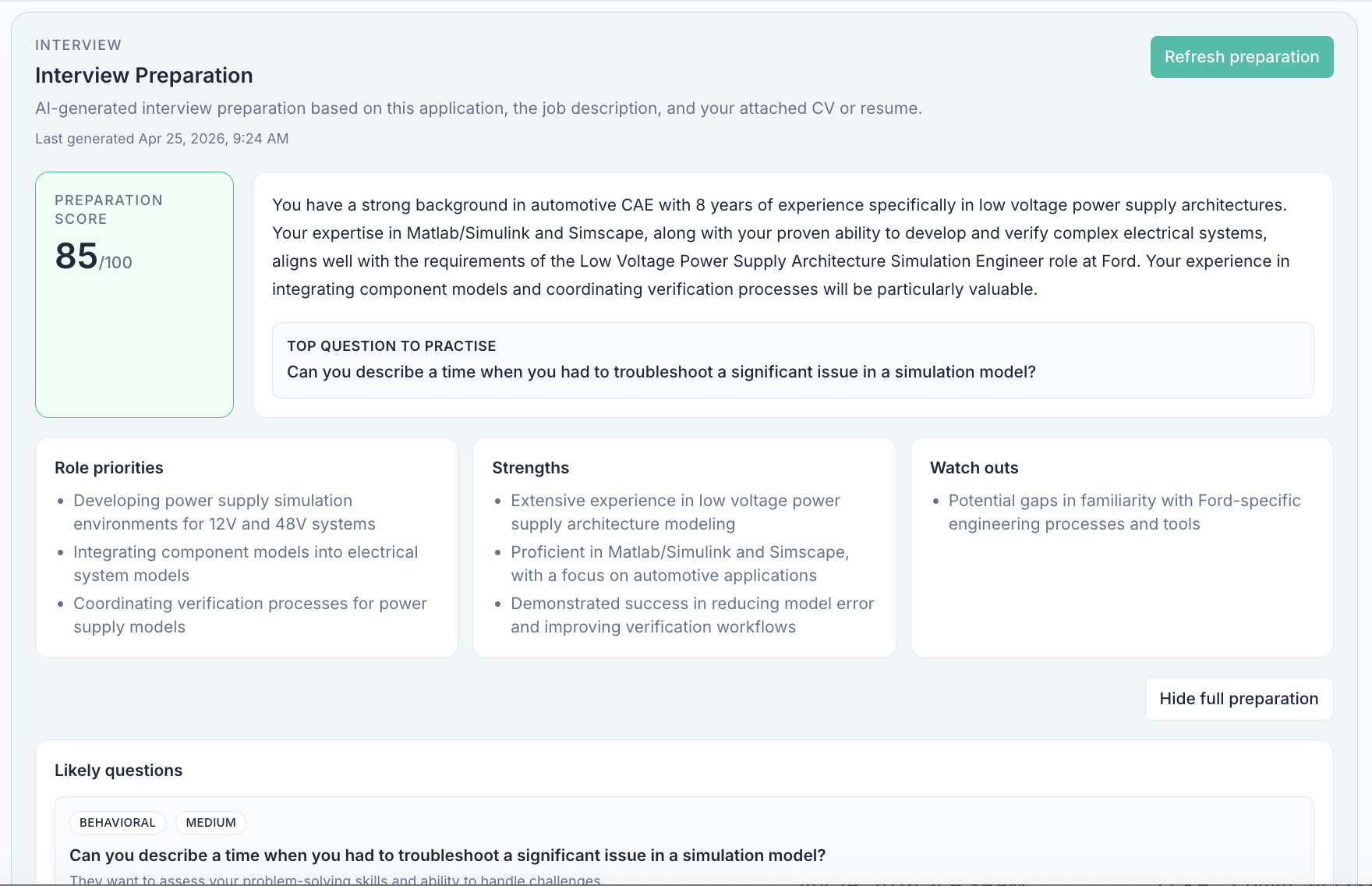
The useful visual is the real working context, not a decorative illustration. Select the screenshot to open the full-size view.